| An inbound marketing strategy is the answer. Traditional outbound real estate marketing casts a wide net aimed at potential clients through direct mail, print ads, classifieds and QR codes, and none of these tactics help realtors get found online by … See all stories on this topic » |
 Business 2 Community |
Tag Archives: ameerah cetawayo
Quick Guide to Inbound Marketing – B2B Marketing
The concept behind inbound marketing is simple: Create compelling content, make it easy to find, and your customers will come to you so you don't have to …
blog.marketo.com/…/how-to-cheat-at-inbound-marketing.html
Media Coaching – The Power of Just Being Yourself

Ah, gotta love last minute media coaching! Just counseled the director of a senior living community in O’Fallon who will be on the radio tomorrow morning.
Yes, I did give her a page of talking points so she would feel comfortable, but the most important thing I told her?
Just be yourself … PEOPLE RELATE TO PEOPLE, not a building, not a service, but another person who can convey credibility and trust.
No matter what you plan to say if the delivery is not sincere, the media placement is not valuable. The old saying, “it’s not what you say, but how you say it, really holds true in this regard.”
Silly Signage – June 1 edition (Cemetery)

I was driving by a cemetery in the St. Louis area this week and I noticed they had a sign out front near the entrance that read “Celebrating 100 years.” That’s right. Let’s celebrate … SOMETHING.
OK. What exactly are we celebrating? The fact that there are more dead people? That the cemetery has been around for a really long time?
Maybe they should have been more specific with a tagline of some sort to clarify. Just saying!
Moral of the story: Your signage should be clear and communicate more than just a vague message. Otherwise you may miss an opportunity to score a home run with your audience.
For example, the cemetery could had something under the “Celebrating 100 years” like “In your community” or “Family-owned and operated since 19XX.”
Am I overthinking this? Let me know. And if you’ve seen some silly signage, pass it along so I can share the sign for a future post.
The Evolution of Branding : Q&A with “Brand Zeitgeist” author Chris Houchens
There are people in this world who go with the flow. And then there are people like Chris Houchens, who are progressive, trend-sensitive and always “on to something” and remain a step ahead. He’s someone to watch.
As an online and multimedia enthusiast while working as a biz reporter at the Bowling Green Daily News I had a routine of visiting Houchens, the Webmaster and online guru for the paper.
Beyond his role at the Daily News, Chris Houchens continues his professional career working in both media and marketing. His resume has great range, from managing operations of a radio group to publishing the online edition of a daily newspaper and from directing the marketing of a healthcare organization to operating his own marketing consulting and speaking business.

Above: “Brand Zeitgeist” author Chris Houchens.
His newest venture is “Brand Zeitgeist,” a book that looks at integrating brands into culture. You can find reviews, excerpts, links to the book’s social media sites, and more at http://www.BrandZeitgeist.com.
Ameerah: Why did you decide to write Brand Zeitgeist?
Chris: I wanted to write a book that encompassed my entire marketing philosophy. The foundation and core of all marketing activities is built on the brand so that seemed a good guide to use.
Also, as I go and speak to groups, I find that people don’t understand what a brand is. I wanted to write a simple and common sense explanation of branding.
Ameerah: What has the response been so far?
Chris: The people who have read it have loved it. The feedback that I have gotten reveals that readers really enjoy the stories and case studies. I tried to use examples that haven’t really been used before in branding books so we get some unique stories ranging from Santa Claus to how Hawaiians eat SPAM as illustrations of brand strategy.
I attempted to write the book in a way so that anyone, even if they’re not a marketer, would enjoy it. But I also think that seasoned brand pros will enjoy the fresh perspective of branding that the book brings.
Ameerah: Branding has become a puffed up word that almost doesn’t have meaning to everyday business people. How does your book seek to reinvent the premise for businesspeople?
Chris: Many businesspeople have gotten caught in one of two brand traps. The first is that many think of a brand just as the logo and nothing more. While the logo and other visual aspects of the brand are important (I devote an entire chapter of the book to them), the true meaning of brand runs much deeper.
The second brand trap is that for people who have tried to understand the deeper implications of brand, they have gotten bogged down in meaningless buzzwords and theory that don’t work in the real world.
I wrote Brand Zeitgeist to get past both those. The book teaches that a brand is nothing more than a relationship between a customer and the business. The question is how do you nurture that relationship and develop other relationships with new customers? Businesses can tap into the power of the zeitgeist to spread their marketing messages by bringing their brand to the forefront of customers’ minds. Businesses can also use the zeitgeist to provide those customers the tools to spread their message through word-of-mouth and other viral channels.
Ameerah: Tapping into the zeitgeist effectively seems to be an intuitive part of marketing – good or bad. How did you choose the term zeitgeist and why did you choose to focus on it?
Chris: The Zeitgeist is an abstract concept to describe the evolving collective consciousness of society. It’s what’s on people’s minds, what they’re talking about in their social circles, and it shapes how trends are developed. Branding is also an abstract idea to describe the relationship between consumers and a company.
It struck me that the two concepts could be used together. Brands need to get into the zeitgeist to have any level of brand awareness. They need to be aware of the current zeitgeist to craft effective marketing messages (PR, advertising, etc).
Ameerah: What is your advice to small businesses searching to tap into the zeitgeist to promote what they’re doing and make a connection with people?
Chris: You have to get inside your customers’ heads. The mistake many small businesses make is that they approach their marketing from their own perspective. You have to market from the mindset of the customer.
Ameerah: How have you seen social media change the marketing field in the last two years?
Chris: Social media and other aspects of the online zeitgeist have completely turned marketing on its head. Marketing has stopped being a one-way bullhorn and now more akin to a two-way telephone. In Brand Zeitgeist, I talk about how customers now have partial control of the brand and are developing conversations about the brand online. Smart companies will help guide those customers in online spaces like Facebook, Twitter, etc.
Ameerah: What are some other trends in marketing affecting the way business owner tell their stories?
Chris: Marketers have abused their trust. People used to believe the information that advertisers told them. Now all marketing is treated with a skeptical eye. Marketers need to stop talking AT customers and start working WITH them.
Ameerah: What is the best way for people to find the book and how can they reach you directly?
Chris: The easiest way to find and get Brand Zeitgeist is probably through your favorite online retailer like Amazon.com or B&N.com. http://www.amazon.com/Brand-Zeitgeist-Relationships-Collective-Consciousness/dp/1450206794/ or http://search.barnesandnoble.com/Brand-Zeitgeist/Chris-Houchens/e/9781450206792/
It’s also available at independent booksellers and national chains like Borders and Barnes & Noble. You can always find me and more info at http://www.ShotgunConcepts.com
Computer-Assisted Reporting and Finding Local Chilean Ties in the Capital Region
Leonardo Villarroel replied to my twitter inquiry only after I translated his Spanish-written feed to English for a story I wrote for The Daily Gazette that was assigned to me Saturday night.
Villarroel had studied at Union College in the summer of 2007, according to a profile published on the college’s Website. But he was back in his hometown of Santiago, tweeting what was happening to him, moment by moment.
For a journalist on deadline, he was someone I was looking for as I feverishly dug around for local reaction to a tragedy happening thousands and thousands of miles away.
Computer-assisted reporting is becoming more vital to being competitive and cultivating sources – and for me, it was a way I scooped everyone else in the market with less than 5 hours on the assignment.
I went home Saturday night with the affirmation that embracing social media had come to my aid when I needed it the most. And any journalist that is not a believer in it by now is truly being left behind in a very sad, lazy way, if I may say.
The traditional means of analog reporting no longer suffices as we have to go where the sources are, and in a more aggressive way than ever before. People broadcast and publish their own news and stories to their targeted network or audience, many times without local media professional paying attention. But there is no reason to call up or, if you really want to be analog, send a fax, to the local newspaper or broadcaster – it’s already out there and in the global public sphere. So if you aren’t paying attention, you are missing out.
The Earth became flat as I found cell phone numbers, e-mail addresses, everything I needed to get directly in touch with local people who were quotable and appropriate to explain the impact of the Chilean earthquake through local perspectives.
I also found a local non-profit organization using Google that put me in touch with a woman born in Chile, who had lived in the Capital Region for most of her adult life, but had been up watching satellite TV for hours Saturday as she waited to hear from loved ones.
This isn’t the first time I’ve used social media to break news – did the same when I was a producer for a television station in Albany when the terrorist attacks in Mumbai, India happened. I found a local couple, which owned a restaurant in Schenectady, New York, who had lived in Mumbai for decades before moving to New York. We were the only station that night with a local perspective on the attacks, and everyone else ran packages from network affiliates. Again, I say, using “the force” works. Scoff it, disbelief it, but for news professionals, such examples of computer-assisted reporting really help you stand out from the competition.
And if you’re wondering, here’s what Leonardo sent me the next morning on Twitter:
“@ameerahcetawayo Yes, I’m fine.Santiago is quite shaken, but nothing more than that.We are pretty much in awe of what happened in the South,” he wrote to me in English.
Not bad for someone who’s now a Facebook friend and surviving one of the worst earthquakes ever.
For more on computer-assisted reporting visit these sites:
Poynter Resources:
http://www.poynter.org/content/content_view.asp?id=1181
Nieman Lab:
http://www.niemanlab.org/2009/05/the-golden-age-of-computer-assisted-reporting-is-at-hand/
NICAR: National Institute for Computer-Assisted Reporting
http://data.nicar.org/
Writing AP Style with Ameerah
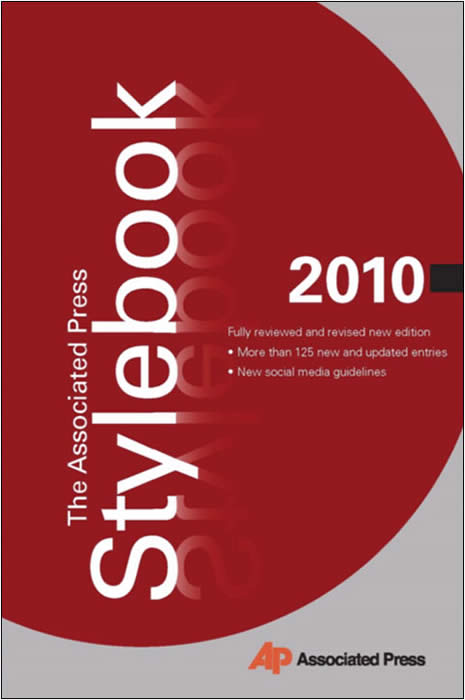
My workshop – “Writing AP Style” – is published on-line with the help of The College of Saint Rose in Albany, NY.
Check it out!
http://mediasite.strose.edu/mediasite/Viewer?peid=acaf840f-51b4-4c47-b511-196f554d1ed0
This workshop goes over common mistakes with AP style for both broadcast and print formats and presents hands-on exercises that will give you practical exposure with AP style and the differences in writing style from academic writing.
I believe education is the foundation of success and had a wonderful time writing and organizing this 1-hour workshop, I look forward to doing more of this kind of work in the future.
Cutting Costs – Changing By Necessity

The business model of journalism is changing.
That’s not new information – but it’s a on-going conversation on just what TV stations, radio and newspaper outlets will become.
What’s for sure is that gatekeepers are slashing budgets by necessity. And more cost-cutting measures (read: layoffs) are inevitable.
TV Newsday’s Sid Guel penned “Eight Ways Stations Can Save — Eventually – it’s a good read.
But what isn’t addressed by Guel’s list of cost-saving technology and production techniques is how such measures will fly in union environments – many of which keep bodies behind cameras and other equipment.
The larger question for media is whether to change now or change later – changing later is more expensive I believe – might as well cut the cancer out now and get it early, rather than doing emergency surgery on the fly.
Revolutionary innovation can keep media thriving – but failure to see the vision and adjust early on – threatens long-term viability.
There are countless examples of companies who fail to adjust to obvious industry trends – and suffer horribly because of it, either by losing market share to rivals or going out of business altogether.
So again, I ask the question, are you an asset or a liability to your business? Are you hanging on, not wanting to learn new things – or are you striving to construct the new way of operations that’s going to keep your industry alive?
 Ameerah Palacios, APR, CTA, MBA
You must be logged in to post a comment.